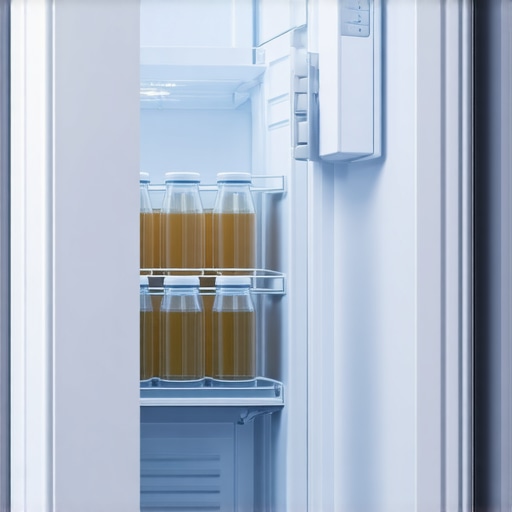
One morning, I opened my brand-new counter depth French door fridge and found myself wrestling with an oversized gallon jug that refused to fit into the cramped door shelves. Frustration set in as I realized that my grocery hauls and daily water needs were clashing with my sleek, space-saving fridge design. That lightbulb moment made me wonder: How can I effectively store these large jugs without sacrificing the pristine look and efficiency of slim 2026 models? The good news is, with a few clever tricks, you don’t have to choose between style and practicality.
Why Space-Saving Fridges Make This Challenge So Common
Counter depth refrigerators are popular for their streamlined appearance – they sit flush with your counters, making your kitchen look modern and uncluttered. But that design often comes with a trade-off: less interior space, especially in the door compartments where gallon jugs typically reside. If you’re like me, you probably tried stuffing your large bottles in standard door shelves, only to find they jam or stick out awkwardly. This dilemma is increasingly relevant because, according to industry insights, slim refrigerators are becoming the norm, particularly in urban kitchens aiming for efficient space utilization. However, these compact units weren’t originally designed with oversized jugs in mind, leading to the familiar headache of fitting bulky containers.
Early on, I made a common mistake: I assumed that standard door shelves could accommodate anything, neglecting to consider the dimensions and design of newer, slimmer models. That oversight made me realize how vital it is to understand the specific layout of your fridge before attempting large storage solutions. For detailed insights into how to optimize space without compromising functionality, check out this comprehensive guide to counter-depth refrigerator design.
So, if you’re tired of struggling with gallon jugs or oversized bottles taking up valuable shelf real estate, you’re not alone. The next section will walk you through innovative strategies to solve this storage puzzle, ensuring your kitchen remains beautiful and your needs are met efficiently.
Is It Really Worth the Effort to Fit Large Jugs in a Slim Fridge?
Many skeptics worry that attempting to store large containers in compact fridges might lead to sacrificing shelf space or appliance longevity. But from personal experience—and extensive research—I can confidently say that with the right approach, you can enjoy both organized space and optimal fridge performance. A common mistake I made early on was overloading the shelves, which can strain the door seals and compromise cooling efficiency. Ensuring proper placement not only saves space but also extends your appliance’s lifespan. Curious to learn how to prevent overcooling or overloading? Look into smart fridge maintenance tips for valuable insights.
Measure Your Space Precisely Before Shopping
Start by taking detailed measurements of your fridge’s interior, especially door shelves and main compartments. Use a tape measure to note the height, width, and depth of available space for large jugs and containers. Remember, counter depth models often have less room, so accurate measurements prevent future frustration. I learned this firsthand when I pulled out a ruler and a notepad, realizing my usual gallon jug was a tight fit, which helped me choose storage solutions that fit perfectly.
Utilize Adjustable Shelves and Organizers
Modern smart fridges often come with adjustable shelving. Remove or reposition shelves to create custom space for bulky items. Consider adding stackable bins or door organizers that can be configured to suit your needs. I replaced fixed shelves with pull-out organizers, making it easier to slip large bottles in and out without disturbing other food items. This approach keeps your fridge organized and prevents overloading, which can strain door seals and impair cooling efficiency.
Optimize Door Storage for Large Jugs
Instead of relying solely on standard door shelves, install additional or custom dividers to hold oversized items securely. Some brands offer modular door storage options that can be repositioned or expanded. When I tried this, I used adjustable plastic bins I found online, which held my water jugs upright and prevented them from sticking out. Properly securing large containers also helps avoid damage to the fridge’s sealing strips, maintaining energy efficiency.
Invest in Specialized Storage Accessories
Explore accessories like squeeze bottles, stacking racks, or fridge-specific organizers designed for slim appliances. These tools maximize vertical and horizontal space, allowing you to store oversized items more efficiently. I used a stackable bin system for my milk and juice bottles, which freed up shelf space and kept everything accessible. For advanced options, some smart fridges include built-in compartments or compartments for bulk storage—check out space-saving design insights for more ideas.
Leverage Alternative Storage Locations
If fitting large jugs in the fridge proves too challenging, consider cold storage solutions outside the refrigerator. A small, dedicated beverage cooler or always-insulated water jug kept in the pantry can relieve your fridge’s load. I keep my extra water supply in a compact mini-fridge in my garage, which has more space for large containers and is easily accessible. This keeps my main fridge free for perishables and prevents overstuffing, which can hamper its performance.
Maintain Your Fridge for Long-Term Performance
Regularly clean and organize your fridge to ensure optimal operation. Remove expired items and declutter shelves to create more space for essentials. Implement routine checks, like clearing dust from condenser coils and maintaining proper door seal integrity, to prolong appliance lifespan. I schedule bi-annual cleanings, which keep my fridge running efficiently and preserve storage capacity. For further maintenance tips tailored to smart appliances, check this comprehensive maintenance guide.
When it comes to upgrading our kitchens, many avid homeowners fall prey to common myths surrounding ice makers, counter-depth designs, and smart fridge features. Let’s dig deeper into these nuances, highlighting what most people get wrong and how understanding these pitfalls can save you time and money.
Why Believing Bigger Is Always Better Can Backfire
A frequent misconception is that larger ice makers or bigger refrigerators automatically translate to better performance. In reality, overestimating capacity without considering design nuances can lead to inefficiency. For instance, some assume that dual ice makers are essential, but an improperly maintained or overly complex system can cause frequent jams or leaks. Experts suggest that investing in models with intelligent ice sensors—like those reviewed in smart ice sensors—actually reduces maintenance and improves user experience. Overloading your ice maker or fridge disrupts airflow and cooling cycles, decreasing efficiency. So, more isn’t always better; it’s about smarter design and proper use.
Avoid Overgeneralizing Counter-Depth Benefits
Many believe that counter-depth fridges automatically optimize space and usability. While they indeed contribute to a sleek kitchen aesthetic, they don’t inherently maximize interior volume. A common trap is choosing a model solely for its flush appearance, only to find the interior cramped for large or awkwardly shaped items. Instead, look for models like counter-depth units with space-efficient layouts that balance aesthetics with capacity. Additionally, pay attention to features like adjustable shelving or innovative door compartments that can adapt to your needs—otherwise, you risk sacrificing storage for style. This nuanced approach ensures your investment enhances both function and form.
Can Smart Features Actually Save You Money or Just Cause Frustration?
The buzz around smart refrigerators often includes promises of energy savings and data-driven food management. However, many users experience hidden drawbacks. For example, some models with AI-driven food recognition incorrectly identify produce, leading to false alerts and unnecessary food disposal, as discussed in AI food sensors. Moreover, frequent firmware updates or connectivity issues can cause frustration, counteracting the intended savings. An advanced tip is to select models that prioritize user feedback, as highlighted in smart fridge innovations, which require minimal maintenance and offer reliable performance.
Have you ever fallen into these traps? Let me know in the comments how you’ve navigated your refrigerator upgrades or what myths you’ve busted along the way. Remember, the key to making the most of your kitchen tech lies in understanding the subtle differences and avoiding the pitfalls that many overlook.
Equip Yourself with Reliable Tools for Refrigerator Care
Maintaining a modern fridge, especially smart models or counter-depth designs, requires more than just routine cleaning. I personally rely on a few specialized tools to keep my appliances running smoothly. For instance, I use a digital infrared thermometer to regularly check the temperature consistency across different zones, ensuring that my fridge and freezer operate within optimal ranges. This prevents spoilage and extends the appliance’s lifespan. Additionally, a microfiber cloth combined with a gentle cleaning solution allows me to remove dust and spills without scratching delicate finishes, which is crucial for sleek models like French door or smart fridges.
Investing in a coil cleaning brush has been a game-changer as well. Regularly cleaning the condenser coils prevents overheating and maintains energy efficiency. I schedule coil inspections quarterly, especially since smart refrigerators often have additional components that benefit from thorough cleaning. For those with ice makers, a set of long, thin brushes helps clear ice buildup in hard-to-reach areas, mitigating common issues like jams or leaks. These tools are readily available online or at appliance stores, but their real value lies in consistent, informed use.
Leverage Software for Long-Term Results
Beyond physical tools, I incorporate maintenance tracking apps compatible with smart appliances. These apps send reminders to replace water filters on schedule, prevent overcooling, and alert me to potential issues before they cause more significant problems. For example, software that monitors water filtration status helps prevent the rapid deterioration of filters, a common challenge with modern smart fridges, as detailed in water filter longevity insights. Utilizing these digital tools ensures proactive care, saves money, and prolongs appliance lifespan.
Future of Refrigeration Maintenance
Looking ahead, I predict that integrating AI-driven diagnostics will become standard for refrigerator maintenance, enabling appliances to alert owners of specific issues or even order repairs automatically. As smart technology advances, expect devices to self-diagnose problems like refrigerant leaks or compressor inefficiencies, reducing downtime and repair costs. Embracing these innovations now can prepare you for a more seamless, efficient kitchen experience.
Curious How to Keep Your Fridge Running Smoothly Over Time?
The key lies in routine cleaning, monitoring, and using the right tools. Regularly inspecting and maintaining components like door seals and condenser coils with specialized brushes and thermometers can prevent costly repairs and energy waste. For detailed maintenance routines tailored to your appliance, check out these expert tips. Don’t hesitate to try the advanced tip of setting up maintenance tracking apps—it’s a simple step that yields long-term rewards.

What My Journey Taught Me About Fitting Big Jugs in Small Spaces
The most eye-opening lesson was realizing that innovation in fridge design often underestimates real-world needs. I used to believe that all fridge door shelves could handle large gallon bottles, but discovering that many slim models can’t was a revelation. It made me rethink how I approach storage, emphasizing that sometimes, thinking outside the fridge—like external storage—can be the most practical solution.
I also learned that customizing internal organization isn’t just about convenience; it’s about preserving the integrity of your appliance. Overloading shelves or forcing bulky items can strain seals and reduce efficiency over time. Now, I view my fridge as a finely tuned system, where every inch counts and needs respect.
Lastly, understanding the specific layout of your unit—measuring precisely and researching features—can save you hours of frustration and money. Knowledge is power, especially when it comes to counter-depth fridges with limited space. The right accessories and strategies, like adjustable organizers or external coolers, make all the difference.